
Hatch’s In-Beta verification capability is a compressed, milestone-driven 8-week technical experiment engineered to pressure-test frontier technologies against the landscape of public safety.
This intensive sprint is explicitly built to convert the raw potential of transformative technologies with little or no prior presence in public safety into technical capability under tailored experiment objectives. The outcome of In-Beta is a proof-of-technology, which creates necessary evidence and data to support downstream R&D investments by public safety end-user agencies, de-risking explorations and establishing initial trust through its verification capability.

A frictionless, milestone-driven technical verification capability engineered to rapidly assess frontier technologies on their viability in the public safety vertical.
Non-Dilutive Funding
8-Week Experiment
Targeted Technical Verification
Showcase to End-Users




The nature of In-Beta is kept lightweight, taking into consideration how it is an introduction for both sides: On the possibility of a technology finding a new place in public safety.
To fuel the technical sprint, selected start-ups invited to participate in In-Beta will receive a total of SG$30,000 in non-dilutive funding. This prize money is provided to cover all associated costs with developing the working proof-of-technology and travel to Singapore. This sum is provided free of equity to ensure awarded participants retain full control and ownership of their companies and intellectual properties.
In Beta’s 8-week timeframe is meant to balance rigorous testing while being respectful of the resource outlay of selected start-ups. Each experiment is tailored by Hatch’s technical panel to the specifications of the assessed technology.
Unlike Hatch’s other programmes with specific challenges attached to each start-up, In-Beta’s goal is more exploratory. Instead of diving directly into a solution, the team asks “what-if”? The experiments reflect that vision, kept concise with clear objectives meant to determine its ability to deliver hypothesised impact in public safety via a working proof-of-technology.
Hatch’s Technical Panel of relevant experts drawn from Hatch, technical experts in public safety, and from the wider scientific community will conduct the final assessment of experiment outcome at the end of In-Beta.
The intended outcome of the experiment is not to narrow the contexts in which the technologies are applicable to specific operational outcomes. Instead, the mix of technical experts offer a wider horizon of possibilities, matching what the technology is capable of via experimental verification with present and forecasted public safety opportunities.
Before a possibility can intersect with reality, there needs to be alignment of expectations with those whose operations will see the most impact from the technology.
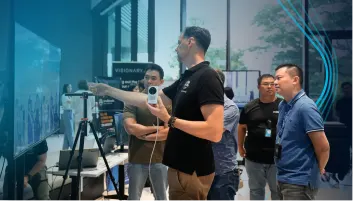
Relevant end-users and operational stakeholders are invited to attend the in-person experiments at the end of In-Beta to experience together the “what-if” of the technologies. These small group sessions are essential to establish trust to seamlessly transition the project to one further downstream with a potential for deployment – whether through direct invitation to Hatch’s other proof-of-concept validated programmes or other development opportunities.
In-Beta specialises in exploring how public safety concepts and challenges of tomorrow can be met by innovations discovered in the frontiers of technology. To anchor these concepts in the absence of specific challenges, possible public safety adaptations are built into each experiment so that the extraordinary can still be grounded in reality. Here are some examples of past experiments.
Contact Us
AI-powered maritime navigation and safety systems purpose-built for maritime environments.

Generating physics-accurate synthetic data for complex imaging system validation.
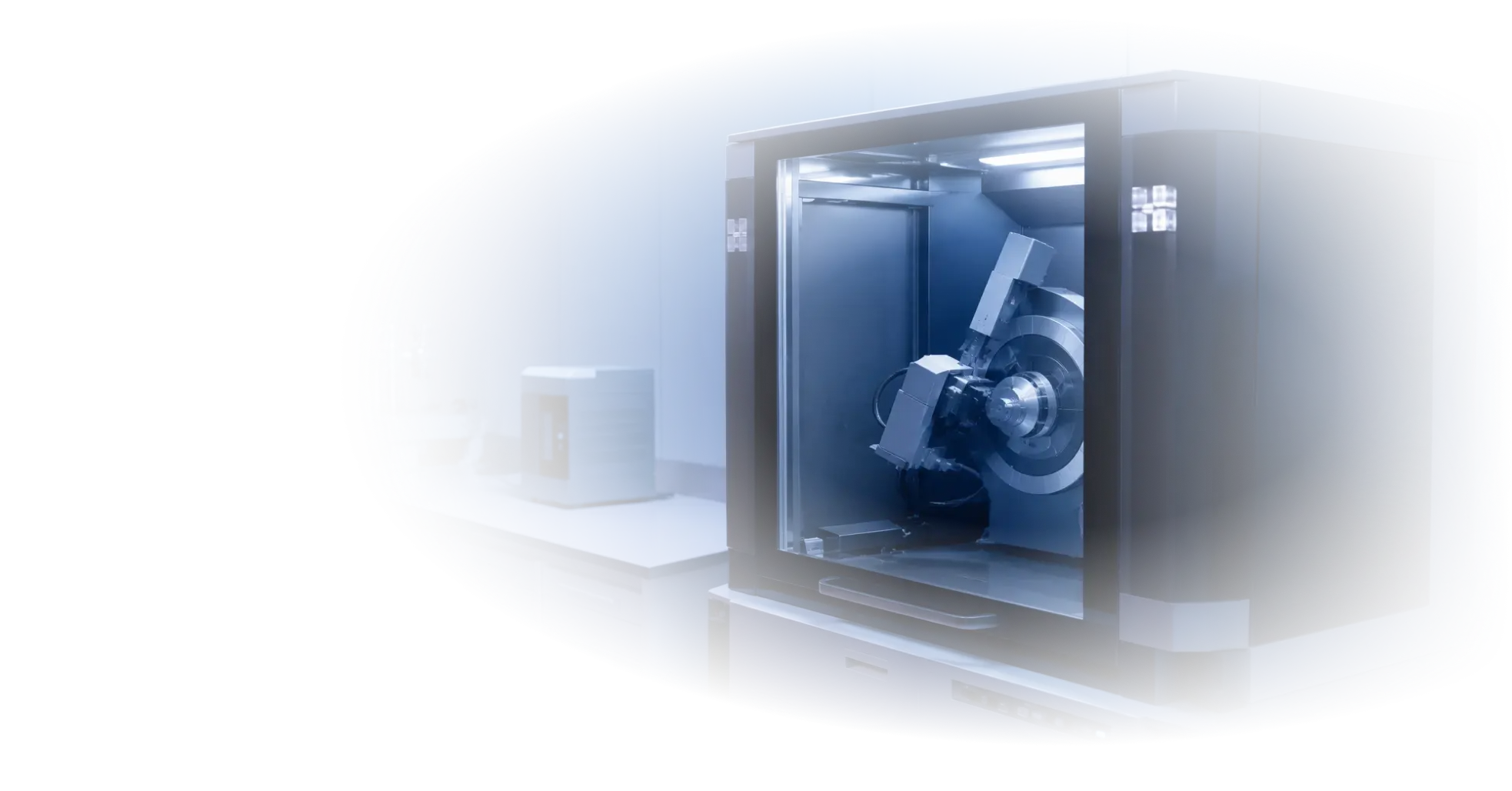
Next generation automatic X-ray diffraction screening technology and systems.
The elegance of In-Beta is in its focus. It strips away disproportionate developments and focuses instead on an experimentation sprint meant to simultaneously prove the viability of a technology and gather end-user buy-in for its adaptation. In 8 weeks, end-users are de-risked in observing the assessment of a previously unproven frontier technology, and start-ups get direct access to decision-makers in public safety agencies. The outcome is equally honest: If interests align, a discussion for further development naturally occurs; otherwise, a departure can be taken with little opportunity cost to either side.
Contact UsExplore the potential of your technology to adapt to public safety needs and help shape future demand without needing significant initial resource outlay for development.
Connect with public safety stakeholders and decision-makers that can shape and collaborate with you on further development beyond In-Beta.
Invitations are only sent out to scouted start-ups with technologies that either fit an existing concept or have forecasted potential in public safety, reducing the initial friction of negotiating and realigning expectations and needs from scratch.
Get your proof-of-technology verified by Hatch’s Technical Panel of experts to build trust and confidence.
Post-programme discussions with interested end-users with the intention for further development can be aided by existing frameworks created to move projects towards further testing and trials.
Receive SG$30,000 in non-dilutive funding to develop and verify your proof-of-technology remotely or in Singapore.
Explore what the journey in In-Beta could look like, including the key milestones from experiment to on-site demos.
There are no geographical or company size requirements for participation. All invitees must either own the IPs or have a valid license to use the IPs of the technology solution proposed.
In-Beta looks for frontier deep-tech solutions in reference range of Tech Readiness Levels 4 and above. The key is for the company to have a working proof-of-technology that is untested in the public safety operational environment. Frontier solutions may fall below Level 4 given the nature of such technologies – in such cases, sufficient resources should be available to meet future development needs into a working prototype and beyond within an appropriate timeline, in the event of end-user interest.
Invitees will be evaluated on their fit to challenge, novelty of technology, relevant team experience, and business model. The entire selection process is conducted virtually.
In-Beta holds 2-3 cohorts each year at variable times. Start-ups may be invited to participate in it at any time of the year, by emails with either the @thehatchx.com or @txv.sg domains.
A panel of Hatch, Home Team challenge owners and relevant tech experts from HTX (Home Team Science & Technology Agency) will evaluate the applications.
Hatch does not retain any equity or ownership of the solution developed during the programme. Invitees retain full and exclusive ownership of their information and intellectual property rights.
Invitees offering customisations to existing solutions to meet challenge requirements are eligible for In-Beta. Those with purely market-ready products without customisations may still get in touch to be considered for other programmes.
The invitee will be expected to develop a working proof-of-technology either remotely or in Singapore, and conduct an in-person on-site testing in Singapore at the end of the experiment.
The non-dilutive prize money will cover all proof-of-technology experimentation costs and travel arrangements with no additional travel allowance being disbursed.
At the end of In-Beta, this proof-of-technology will be tested in Singapore for an in-person session in the most appropriate environment.
The information submitted by applicants will only be made available to:
Hatch
Selection panel
Public safety challenge owners with potential interest or challenges related to the technology (e.g. Home Team)
If selected, a participant's experiment may be announced in the public domain for the purpose of marketing promotions.
Access to (potentially) sensitive data are handled on a case-by-case basis between the awarded invitee and the challenge owner. Depending on the target outcome, if real data cannot be shared, the challenge owner may request the use of open source or simulated data.
Hatch will provide support and guidance for scaling successful proofs-of-technology from In-Beta towards opportunities for further development and operational trials, with the eventual goal of deployment.
What we do is only possible because of the people who place their trust in us. If you are a public safety/innovation ecosystem stakeholder or a start-up with deep-tech solutions looking to shape the future of public safety, let us have a conversation.
Powered by




.webp)